


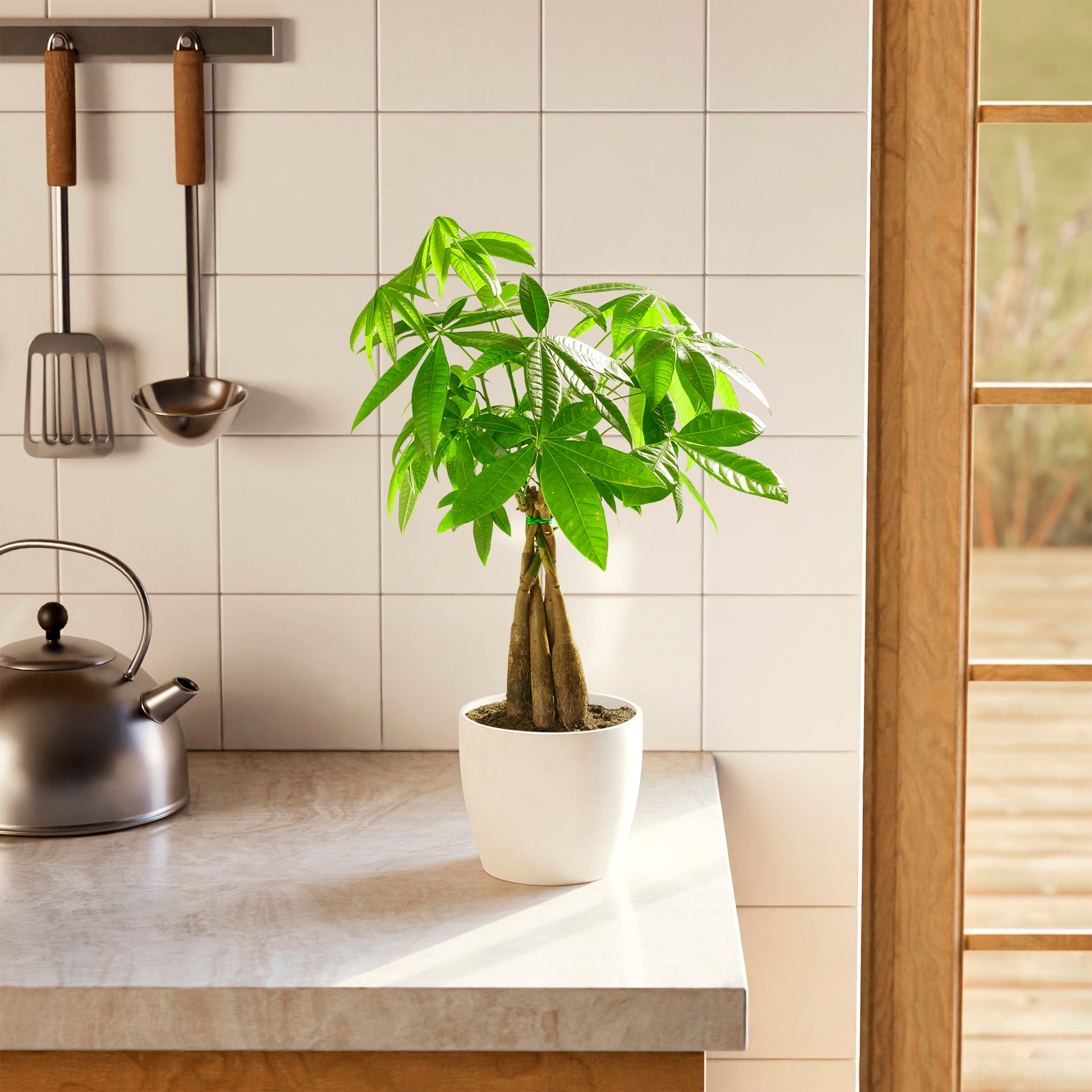


The Money Tree plant (Pachira aquatica), also called Guiana chestnut or Malabar chestnut, is an easy-care indoor tree with a braided trunk and glossy green leaves. It is a popular gift for new homes and offices, and in Feng Shui it is associated with luck and prosperity. The ASPCA lists it as non-toxic to cats and dogs. Give it bright, indirect light, water when the top 2 to 4 inches of soil are dry, and keep it away from cold drafts. Not to be confused with the Chinese Money Plant (Pilea peperomioides). See our full money tree care guide.

Bright, indirect light to filtered sun.
Water when the top 2 to 4 inches of soil are dry.
Enjoys moderate to high levels of humidity. Spritz occasionally.
Ideally, the Money Tree likes the room temperature at 72°F. They handle warmth rather than cold so keep them away from cold drafts.
Outside: Grow in morning light, partial shade (4-6 hours) where nights are above 45°F.
Indoors: The Money Tree prefers bright, indirect light for at least six hours near a south-, east-, or west-facing window.
Fertilize bimonthly during their growing period. Use a balanced liquid fertilizer at 1/2 strength. Reduce during the fall and winter months while the plant is in their dormant phase and refrain from watering as much so they can rest.
Wait 6 to 12 months before repotting, or until roots grow through the drainage holes. In spring, move it to a pot about 2 inches wider with drainage holes and a well-draining indoor mix with perlite. Keeping your money tree in a snug pot is the easiest way to keep it small.
Prune the leaves to stimulate new growth by cutting in front of a leaf node. Trim off any dead or damaged stems to keep them healthy.
Stem cutting: In early summer, cut a 4 to 6 inch stem tip just below a leaf node and root it in a glass of water, changing the water weekly. When the roots reach 1 to 2 inches (usually 3 to 4 weeks), plant the cutting in a small pot of well-draining mix and keep it in bright, indirect light.
The Money Tree (Pachira aquatica) is a beautiful plant with glossy, deep-green leaves. It has a woody trunk formed by several intertwining stems, giving it its unique braided shape. The money tree plant belongs to the Malvaceae family, which includes a variety of plants from flowering mallows and Hibiscus to edible plants like okra and cacao. Pachira aquatica originates from the swamplands of Central and South America. Growing in the wild, this hardy plant lives for decades, often reaching up to 60 ft in height. As an indoor plant, the money tree can reach 8 ft. tall. It loves bright, indirect light and enjoys some extra humidity.
The Pachira money tree is an ideal low-maintenance plant for homes with cats and dogs, as it’s non-toxic to pets. Moreover, this lovely indoor tree is considered one of the most powerful luck-bringing plants in Feng Shui. It is associated with prosperity and symbolizes good fortune, making it the perfect gift plant to convey your best wishes on various occasions, including weddings, moving into a new home, or starting a new job.
Money Tree (Pachira aquatica) is one of the easiest potted trees to grow indoors. It likes bright, indirect light, warm temperatures, and a well-draining soil type. Its braided trunk makes it a popular gift plant, and in Feng Shui it is associated with luck, balance, and growth.
Although the Pachira plant isn’t fussy, knowing the basics of money tree care is essential to keep your plant happy and thriving:
Water when the top 2 to 4 inches of soil are dry, then empty the saucer so the roots never sit in water. Filtered or distilled water helps if your tap water is hard. A Smart Watering planter takes out the guesswork.
The Pachira plant prefers bright, indirect light, as direct sunlight can scorch its leaves. It grows best at room temperature, from 65°F to 75°F. If you want to grow your money tree plant as a porch plant, keep it in partial shade, and move it indoors when night temperatures are expected to fall below 50°F.
The money tree requires some extra humidity. Place a pebble tray under the plant’s pot or mist your plant occasionally to increase moisture in the air around it. You can also group your plants to help them benefit from the transpiration of other plants, creating a microclimate of their own.
Use a well-draining potting mix with added perlite. Repotting is covered in the care tab above. Feed with a balanced liquid fertilizer at half strength in spring and summer, following the schedule in the Fertilizing tab.
To braid your own, root at least three cuttings (see the Propagation tab), plant them together, and weave the stems while they are young and flexible. Tie the top loosely with soft ribbon, and loosen the tie as the trunks thicken so it does not cut into the bark.
Prune your money tree to remove any damaged or wilted leaves to promote the growth of new leaves. Some common money tree issues include browning leaves due to underwatering. An overwatered plant, on the other hand, shows signs of yellowing leaves.
Whether you buy a large money tree or a small bonsai version, these lovely plants will enhance your home’s indoor air quality and share their vitality and charm.
Grouping plants with similar growing requirements to Pachira aquatica care needs will help you create an effortless indoor jungle! So, add to your money tree delivery the following easy-care tropical plants:
Looking for another lucky plant? Browse our good luck plants, or try one of these (note: not pet safe):
Our plant experts recommend checking the soil before every watering instead of following a strict calendar. A money tree in brighter light or a smaller pot will dry out faster than one in lower light or a larger pot.
A: To bring abundance and good luck into your home, place your money tree in a southeast area of your home. Money trees thrive in bright to medium indirect light, protected from cold drafts.
A: Gifting a money tree means you wish someone good luck. Traditionally, the money tree symbolizes prosperity, financial success, and good fortune. It also makes the perfect housewarming gift.
A: Money trees usually have 5 or 6 leaves on each stem. Finding stems with 7 leaves is rare and considered very lucky.
A: No, braiding is optional. A braided money tree is several young stems woven together while the trunks are still flexible, and an unbraided tree grows just as well. Many owners keep the braid because it is decorative and, in Feng Shui, a symbol of strength and good fortune.
A: Place your money tree in a bright, indirect light. Avoid direct sun because it can burn the leaves. Water when the top 2 to 4 inches of soil feel dry. Use a pot with drainage holes and a loose, well-draining soil type, such as indoor potting mix with perlite. Keep it in a warm room, give it moderate humidity, and feed it with a balanced liquid fertilizer during the growing season.
A: A money tree usually needs water about every 1 to 2 weeks indoors, but the right watering schedule depends on light, temperature, pot size, and humidity. Always check the soil before watering. If the top 2 to 4 inches are still damp, wait a few more days. Wet soil that stays soggy can lead to root rot.
A: The best soil type for a money tree is a loose, well-draining indoor potting mix. Adding perlite helps improve drainage and airflow around the roots. Avoid heavy soil that stays wet for too long.
A: Indoors, a money tree can reach up to 8 feet tall in the right conditions. In the wild it can grow up to 60 feet. To keep it smaller, leave it in a slightly smaller pot and prune lightly to shape it.
A: Yes. The ASPCA lists the money tree (Pachira aquatica) as non-toxic to dogs, cats, and horses. Chewing on the leaves can still cause mild stomach upset, such as vomiting or loose stool, so keep it out of reach of pets that like to nibble. Browse more pet friendly plants.
A: Our Money Tree plant starts at $45 for a Small in a grower pot. A Medium starts at $60, a Large at $99, and an Extra Large at $136. Eco Pots, baskets, and Smart Watering planters add to the price.
Invite good fortune and enhance your home’s air quality with a gorgeous Pachira aquatica for sale from Lively Root!


livelyroot.com
@livelyroot
[title]
[message]Love it? Add to your wishlist
Your favorites, all in one place. Shop quickly and easily with the wishlist feature!

